A tightness test or let-by check is only as good as the gauge or meter doing the measuring, and getting an accurate reading depends on using the right piece of equipment for the pressure range involved. We stock differential pressure meters, digital manometers, water and flexible U gauges, and analogue pressure gauges from Kane, Anton, Testo, TPI and Arctic Hayes, along with the hoses, test tees and accessories needed to complete a test.
Whether you're carrying out a routine tightness test or monitoring pressure on a permanent installation, we keep the full range in stock. Get your gas pressure testing equipment delivered quickly or pick it up from our collection point.
Read More
Our range covers digital differential pressure meters and manometers, traditional water and flexible U gauges, analogue pressure gauges, and the hoses, test tees and accessories required to carry out a test.
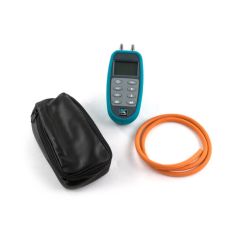
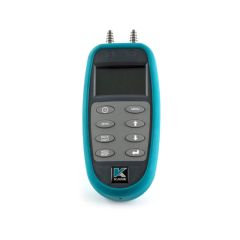
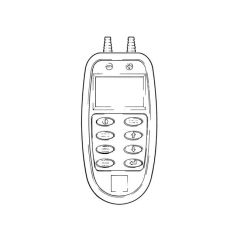
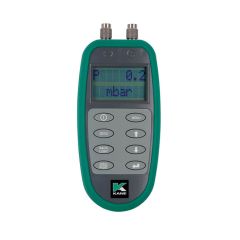
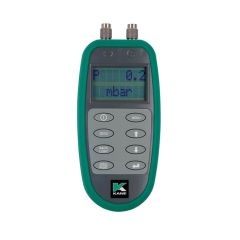
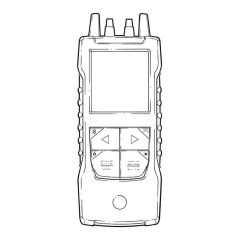
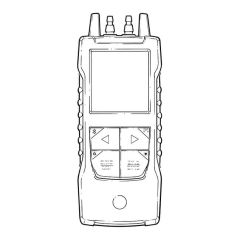
Differential pressure meters are the standard tool for gas tightness or let-by test, most offering log storage, and several also transferring readings wirelessly for reporting. The Kane DPM Differential Pressure Meter measures ±150 mbar, with let-by and tightness tests available via the Kane Live app. The older Kane 3500 series is available in low-pressure (3500-2, 3500-5) and high-pressure (3500-15, 3500-30) variants for jobs outside the DPM's range.
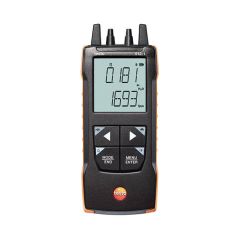
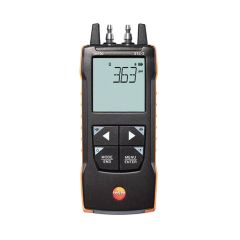
Anton's APM range comprises three tiers: the APM 135 handles domestic gas pressure testing from -39.99 to 130 mbar with standard spigot connections; the APM 145 adds wireless data transfer to the app and an infrared port for data printing at the same range; and the APM 155 keeps that connectivity but extends the range up to 2 bar for higher-pressure work. The Hayes DT8890A covers 0 to ±138 mbar with data hold and max/min tracking, and the Testo 512-1 and Testo 512-2 Compact Class meters cover 0-200 hPa and 0-2000 hPa, respectively, with the 512-2 adding a Bluetooth 5.0 connection to the Testo Smart app.
When a job calls for a dedicated manometer rather than a differential pressure meter, the Testo 510 Digital Manometer covers 0 to 100 mbar, with dual inputs and a magnetic base for hands-free use, making it useful for HVAC airflow work as well as gas testing. The TPI 608 Single Input Manometer and TPI SP620 Smart Probe Dual Input Manometer both cover ±150 mbar, with the SP620 operated from a smartphone or tablet via Bluetooth, taking readings from up to six Smart Probes at once and exporting results to a CSV report.
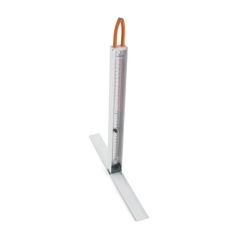
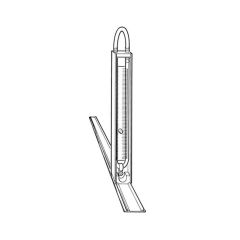
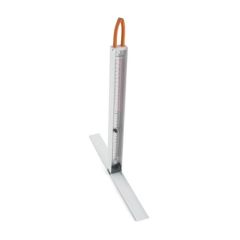
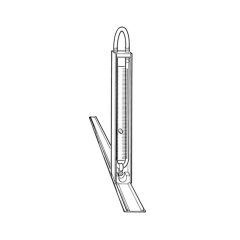
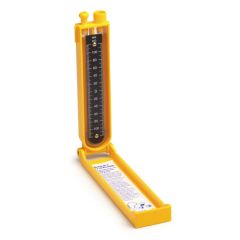
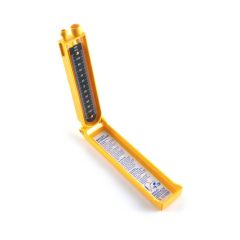
For a simpler, non-electronic reading, our water and flexible U gauges cover the same low-pressure range in a traditional format. The rigid U Gauge Manometer is available in 12" (30 mbar), 18" (45 mbar), 24" (60 mbar) and 48" (120 mbar) sizes, while the Flexible Manometer covers the same 12", 24" and 48" ranges in a flexible hose format that's easier to route around obstructions.
For the 48" size, a High S.G. version is also available: filling the gauge with a denser, high-specific-gravity fluid reduces the required physical height to 24" while still reading the full 120 mbar range, which is useful where space is tight. Both fluid types are sold separately to top up evaporation losses - concentrated yellow fluid for standard gauges, and blue high-specific-gravity fluid for the High S.G. version.
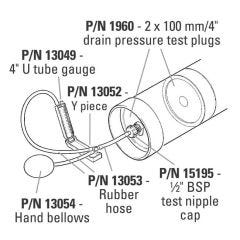
A smaller 4" (10 mbar) version of the rigid U gauge is also available for drain testing rather than gas pressure work - see our dedicated Drain Pressure Testing Equipment range for that application.
For permanent or semi-permanent pressure monitoring rather than a one-off test, our analogue pressure gauges include the Pressure Gauge - 0 to 100 mbar, 63mm Dial, built with a 304 stainless steel case and 1/4" BSP taper male connection to BS EN 837-3, and the Pressure Gauge - 0 to 11 bar, 6" Dial and 4" Dial versions, with a steel case, 3/8" BSP taper male connection and suitability for hydraulic oils as well as gas, to BS EN 837-1.
The Rear Entry - 0 to 11 bar, 100mm Dial version connects at the back of the case rather than underneath, making it suitable for panel-mounted installations. The Oil-Filled Pressure Gauge - 0 to 20 bar, 63mm Dial uses an oil-filled movement to dampen and protect the internal mechanism for higher-pressure applications.
Our low-pressure testing hoses are colour-coded for quick on-site identification - black and red 6.3mm hoses, both cut to length, suit manometers and similar low-pressure gauges. For higher-pressure work, the Anton Medium Pressure Gauge Hose Kit & Case bundles the hose and fittings needed for medium-pressure testing in a single case.
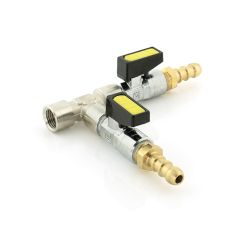
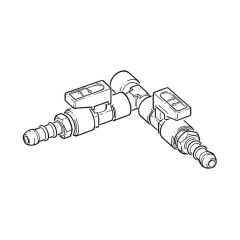
A test tee lets you take a pressure reading from natural gas or LPG pipework without dismantling the system any further than necessary. The Gas Pressure Test Tee - 2 Nozzles, 1/4" Brass provides two connection points, while the Gas Pressure Test Tee with Valves, 1/4" Brass adds built-in isolating valves so each connection can be shut off independently.

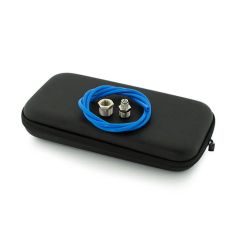
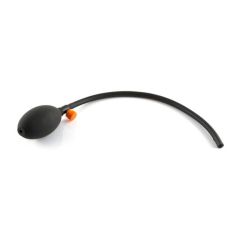
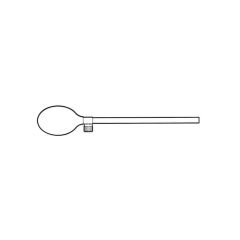
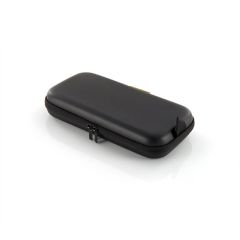
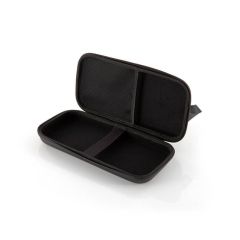
A few smaller parts round out the range: the Gas Meter Test Adaptor - 1" BS 746 x 1/4" BSP connects test equipment to a standard gas meter test point, the Reducing Finger - 1/4" BSP x 15mm Tail Brass adapts a BSP thread down to 15mm pipe, the Anton Hard Carry Case protects the APM and AGM meter ranges in transit, and the Hand Bellows with Tap pressurises a system for testing, with a tap to bleed off air gradually until the target test pressure is reached.
A tightness test verifies that a gas installation maintains pressure without a significant drop over a set period, confirming there are no leaks in the pipework or fittings. A let-by test checks whether a valve is holding back gas properly when closed by monitoring for a small pressure change on the downstream side. Both rely on an accurate pressure meter or gauge and should be carried out by a suitably qualified Gas Safe registered engineer, following the current test procedures for the installation type.
A digital differential pressure meter provides faster, more precise readings and, on several models, can log or transfer results for a report. A water or flexible U gauge needs no batteries and is simple to read directly off a scale, making it a reliable backup or a lower-cost option for routine work. Both measure the same thing - the choice is largely about speed, record-keeping and budget rather than accuracy.
Browse our wider Gas Testing Equipment range for flue gas analysers and leak detectors, or our Gas & LPG Safety Check & Testing Kits for complete kits that bundle several of these tools together.
If you have any questions about our products or need help sourcing test equipment, please call us on 0800801090. Lines are open Monday to Friday from 7 am
What is a gas tightness test?
It checks that a gas installation holds pressure without a significant drop over a set period, confirming there are no leaks in the pipework or fittings. It should be carried out by a suitably qualified Gas Safe registered engineer.
What's the difference between the Anton APM 135, 145 and 155?
The APM 135 covers domestic gas pressure testing from -39.99 to 130 mbar with standard connections. The APM 145 covers the same range but adds wireless data transfer to the app and an infrared port for data printing. The APM 155 retains that connectivity and extends the range up to 2 bar for higher-pressure work.
What's the difference between a manometer, a U gauge and a pressure gauge?
A manometer or U gauge takes a one-off reading during a test, either digitally or via a water or flexible column. A pressure gauge is typically fitted more permanently to monitor pressure on an ongoing basis, for example on a test rig or system panel.
What does "High S.G." mean on a U gauge?
It refers to a high-specific-gravity fluid. Using a denser fluid allows the 48" U gauge read the same 120 mbar range in a more compact 24" gauge, which is useful where space is limited.
What's the difference between the Kane 3500 low and high pressure variants?
The 3500-2 and 3500-5 are low-pressure variants and the 3500-15 and 3500-30 are high-pressure variants, covering different mbar ranges within the Kane 3500 series - check the individual specification for the exact range of each model.
Can these gauges be used outdoors?
Several of our pressure gauges have stainless-steel or enamelled-steel cases suited to occasional outdoor use, but always check the individual product's case material and rating before fitting it in an exposed location.