Automatic differential bypass valves are essential for regulating differential pressure and maintaining minimum flow rates in sealed heating systems. At BES, our selection includes angled and straight differential bypass valves with 22mm and 28mm compression connections, plus a 3/4" threaded commercial option. Choose from Honeywell Home, Caleffi and Altecnic valves, alongside practical alternatives for domestic and commercial sealed heating systems.
Match your system's flow requirements with our range below, backed by free UK mainland delivery on qualifying orders over £50.
Read More
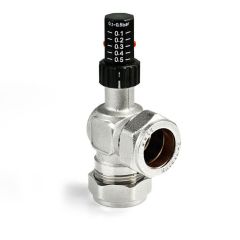
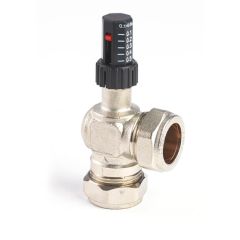
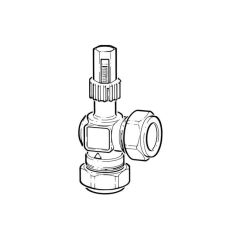
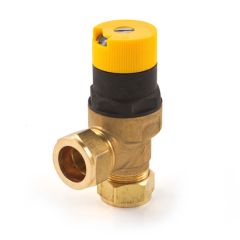
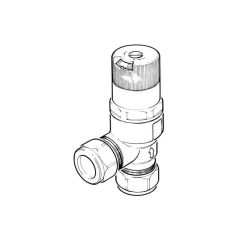
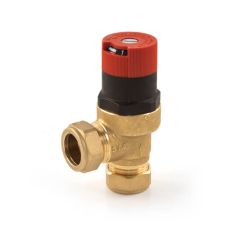
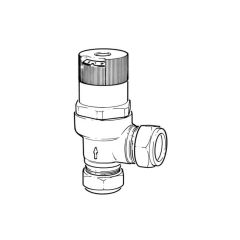
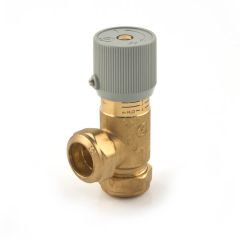
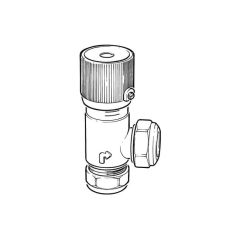
Angled bypass valves change the direction of the bypass pipework through 90 degrees. They are useful where the flow and return pipes are offset, run at right angles or need to be connected within a restricted space. Most angled valves in this range use 22mm or 28mm compression connections. The angled layout can reduce the number of additional elbows required, helping create a neater bypass arrangement with fewer separate joints.
Our range includes:
the Honeywell Home DU145 Auto By-Pass Valve – 22mm Angled, which has a visible pressure-setting scale, protective cap and an adjustable differential pressure, and is designed to control flow through a bypass circuit installed between the heating flow and return
the Caleffi Automatic By-Pass Differential Valve – 22mm Angled, which has an adjustable range of 1–6m head, equivalent to 0.1–0.6 bar, and it is suitable for water and compatible glycol solutions
the Altecnic Ares Angled Differential Bypass Valve – 28mm - for systems using larger pipework. It provides 28mm compression connections and an adjustable range of 0.1–0.5 bar.
22mm options such as the Automatic By-Pass Differential Valve – 22mm Angled with a 0.1–0.6 bar adjustment range and the Automatic By-Pass Differential Valve – 22mm Angled with a 0.1–0.5 bar adjustment range.
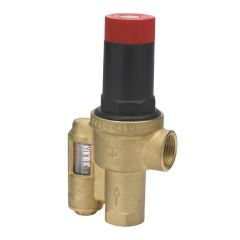
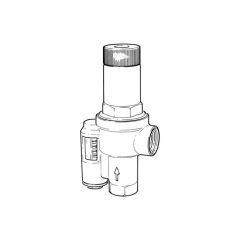
the Honeywell Home Commercial Auto By-Pass Valve – 3/4" Angled with threaded connections suitable for larger heating-system applications. It includes an integral pressure indicator and lockable adjustment control.
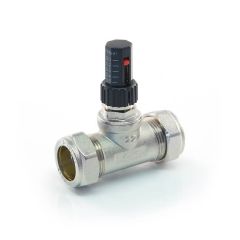
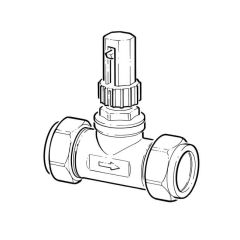
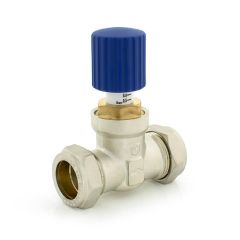
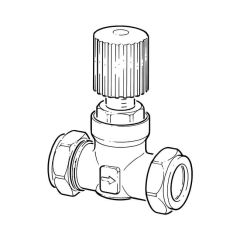
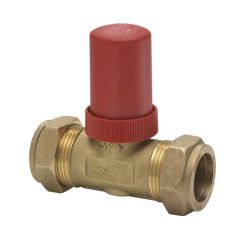
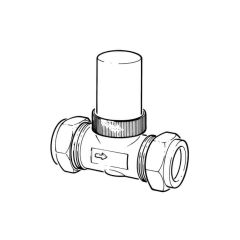
Straight bypass valves have their inlet and outlet aligned through the valve body. They are suited to bypass pipework where the connecting pipes face each other or can be arranged in a direct line.
We offer:
the Honeywell Home DU144 Auto By-Pass Valve – 22mm Straight, with a visible setting scale and an adjustment range of 0.1–0.6 bar.
the Altecnic Ares Straight Differential Bypass Valve – 28mm, which is intended for sealed heating systems with 28mm pipework. Its adjustable setting allows the valve to respond as system resistance changes when TRVs or two-port control valves close.
several 22mm straight valves with different operating specifications, including the Automatic By-Pass Differential Valve – 22mm Straight (adjustable from 0.1–0.5 bar with a listed flow capacity of 1–5m³/h), the Automatic By-Pass Differential Valve – 22mm Straight (suitable for radiator, heating and chilled-water circuits, with an adjustment range of 0.1–0.5 bar) and the Automatic By-Pass Differential Valve – 22mm Straight (adjustable from 0.1–0.6 bar with a lockable setting).
An automatic bypass valve is actuated by the pressure difference between the heating and return flows. When radiator and zone valves are open, water has several routes around the system, and the differential pressure remains below the bypass valve’s setting. The valve therefore remains closed or nearly closed, directing circulation through the heating circuits. The valve should modulate rather than behave only as a fully open or fully closed device. The amount of bypass flow changes according to the pressure difference across it.
An automatic differential bypass valve maintains the boiler’s required minimum water circulation while preventing the pump from operating against a closed head as zone valves close. By regulating system differential pressure, it eliminates flow noise at thermostatic radiator valves and protects heat exchangers from thermal stress
Unlike manual bypass valves that stay permanently open and continuously divert hot water back to the boiler, automatic valves remain tightly closed during normal heating demand. They open dynamically only when rising differential pressure reaches the preset threshold, ensuring optimal hydraulic balance without raising return temperatures unnecessarily.
Angled and straight valves deliver identical hydraulic performance, meaning selection comes down to your pipe layout and physical access requirements. Angled patterns are best suited for tight 90° flow-and-return connections, while straight valves are designed for direct inline pipe runs where straight-through access simplifies servicing.
Position the valve in a bypass circuit between the flow and return pipework, paying strict attention to the directional arrow stamped on the valve body. Once installed and filled, the system should be commissioned by a qualified heating engineer to ensure the pressure differential is set correctly as zone controls close.
Routine checks should focus on inspecting joints for leaks, verifying the adjustment scale is intact, and confirming quiet operation as heating zones shut down. Always recommission the valve setting after any system alterations, such as replacing the circulating pump or modifying zone controls.
At BES, we’ve supported plumbing and heating engineers across the UK for more than five decades. Our comprehensive range of differential bypass valves is designed to meet the needs of modern sealed heating, boiler replacement, and renewable heating installations. By stocking both angled and straight patterns in standard domestic and commercial pipe sizes, we ensure you can find an exact match for existing pipework or for tight boiler cupboard configurations.
Beyond product selection, we provide the logistics support needed for time-critical jobs. Next-working-day delivery is available across mainland UK, with free shipping on qualifying orders over £50. Customers can also choose Click & Collect for local pickup or rely on our hassle-free 30-day returns policy if job specifications change.
Filter our selection below by connection, pattern style or pressure differential rating to find the right valve for your layout. Order online today for fast site dispatch or contact our team for assistance.
What does a bypass valve do in a central heating system?
An automatic bypass valve provides a controlled route between the heating flow and return when other circulation paths become restricted or close. It helps maintain minimum water flow and limits excessive differential pressure across the pump, boiler and system valves.
Does every central heating system need a bypass valve?
No. The requirement depends on the boiler, pump, controls and pipework arrangement. Some boilers have an internal bypass, while other systems maintain a permanently open circulation route. Check the boiler manufacturer’s instructions and complete system design.
What pressure should a bypass valve be set to?
The setting should be based on the system’s calculated differential pressure and the minimum-flow requirement of the boiler or heat pump. Common valves in this range adjust between 0.1 and 0.5 or 0.6 bar, but there is no universal setting suitable for every heating system.
What is the difference between a bypass valve and a TRV?
A TRV controls the temperature of an individual room by regulating flow through its radiator. A bypass valve controls system differential pressure and maintains a circulation route when several TRVs or zone valves close.
Why is my automatic bypass valve making a noise?
Noise may be caused by an incorrect pressure setting, excessive pump speed, high flow velocity, debris, poor system balancing or a valve operating close to its opening point. The complete system should be checked before replacing the valve.