




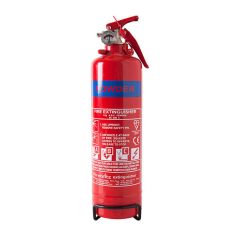
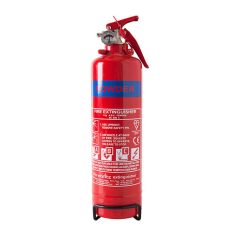
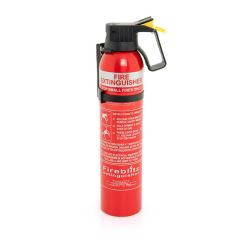
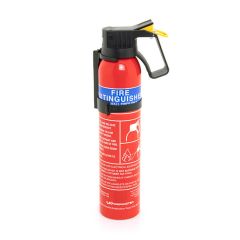

Fire extinguishers are an essential part of safety planning for homes, workshops, vans, boats, offices and commercial premises. At BES, we supply a practical range of portable fire extinguishers, aerosol extinguishers and fire blankets, to help customers choose equipment suited to common fire risks, from solid combustibles and flammable liquids to cooking oil and fat fires.
Finding the right fire safety solution is straightforward with BES, where we offer flexible service options, including next working day delivery for urgent requirements, free delivery on qualifying UK mainland orders over £50, and a convenient Click & Collect option.
Read More
Our fire extinguisher range is suitable for common fire risks and for use on Class A, B, and C fires.
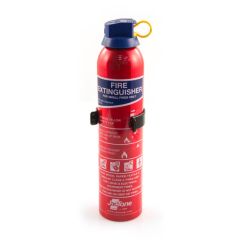
Powder aerosol extinguishers are compact, lightweight units designed for confined spaces and rapid deployment. The range includes ABC powder aerosols alongside specific BC powder aerosol extinguishers available in 600g and 950g capacities.
Standard dry powder units provide versatile multi-class protection. At BES, we stock dry powder extinguishers in 1kg and 2kg sizes, suitable for workshops, commercial vehicles, and domestic properties where multi-risk fire hazards exist.
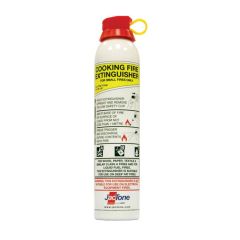
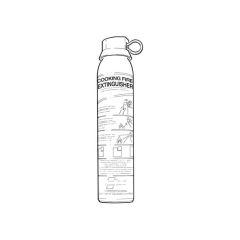
Designed specifically for domestic kitchens and catering environments, the ABF foam aerosol cooking fire extinguisher targets Class A, B, and F fires. It provides an effective, highly targeted solution for suppressing flammable liquid and cooking oil fires before they escalate into structural hazards.
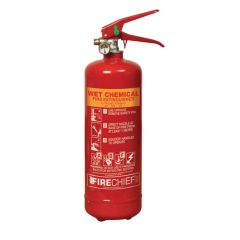
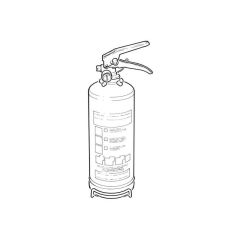
For larger commercial kitchens or dedicated cooking areas, wet chemical extinguishers provide specialised protection against high-temperature cooking oil and fat fires. Our selection includes the Firechief XTR Wet Chemical Extinguisher in a 2-litre capacity, which forms a cooling, soap-like layer over the fuel surface to prevent re-ignition.
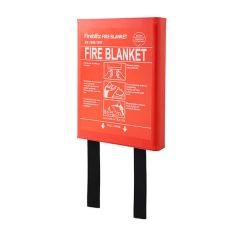
Essential for smothering small clothing or cooking fires, fire blankets provide a reliable, non-mechanical line of defence. The 1m x 1m fire blanket is an industry-standard size, suitable for rapid deployment in kitchens, caravans, and light commercial applications.
As a general safety routine, check that extinguishers are accessible, undamaged, correctly labelled, within their service date, fitted with an intact safety pin or tamper seal, and showing the correct pressure where a pressure gauge is fitted. Any used, damaged, discharged or expired extinguisher should be replaced or inspected by a competent person.
BAFE guidance notes that BS 5306-3 sets out maintenance intervals for portable fire extinguishers, including basic servicing at least once every 12 months for common extinguisher types and visual inspections by the responsible person at least once a month.
Fire extinguishers should be chosen according to the type of fire risk present. Using the wrong extinguisher can be ineffective or highly dangerous, particularly when live electrical equipment or cooking oils are involved.
Fire classes explained:
Class A - fires involving solid materials such as wood, paper, textiles, and plastics.
Class B -fires involving flammable liquids like petrol, oil, paints, and solvents.
Class C - fires involving flammable gases such as methane, propane, and butane.
Class F - fires involving cooking mediums like fats and edible oils.
For home and kitchen use, an ABF foam aerosol or a wet chemical extinguisher is ideal because of their ability to handle cooking fat fires safely. A fire blanket should also be positioned nearby for rapid intervention
For vehicles and cars, compact powder aerosols or dry powder extinguishers are standard, providing vibration-resistant storage and rapid deployment
Dry powder extinguishers are highly effective at quickly knocking down fires and cover multiple classes (A, B, C), making them versatile for outdoor areas or commercial vehicles. However, they can obscure vision and cause respiratory irritation in enclosed spaces. Foam extinguishers are cleaner and form a cooling blanket over flammable liquids, making them better suited to indoor environments.
BES has supported trade and domestic customers for over 50 years, offering a wide range of plumbing, heating, gas, tools and safety products. Our fire extinguisher selection sits within our wider Safety Equipment & Workwear range, making it easy to order essential safety items alongside trade supplies and site equipment.
Our customers benefit from service options including next-working-day delivery, free delivery on orders over £50, Click & Collect availability, and hassle-free 30-day returns. For order support, product information or help finding related safety equipment, our customer service team is available to help.
Browse our full inventory of fire extinguishers, aerosol suppressants, and certified fire blankets to outfit your next project safely. For assistance identifying specific compatibility or multi-site ordering requirements, contact our customer service team on 0800 801090.
Which fire extinguisher do I need for my home?
For many homes, a combination of a compact fire extinguisher and a fire blanket can help address common risks, including small cooking fires, paper or textile fires, and minor appliance-related incidents. The right choice depends on the hazards present, so always check the extinguisher label for the fire class rating before use.
What is the difference between foam and powder extinguishers?
Foam extinguishers are commonly used for Class A solid materials and Class B flammable liquids. Powder extinguishers are more general-purpose and are commonly used for Class A, B and C fires, depending on the product rating. Powder can leave residue and reduce visibility when discharged, so it may not always be the best choice for enclosed indoor areas.
What fire extinguisher is best for a car or van?
A compact powder aerosol or small powder extinguisher is often chosen for cars, vans and boats because it takes up little space and, depending on the rating, can cover common vehicle fire risks, including flammable liquids and solid materials. Store it securely and ensure it is easy to reach in an emergency.
What extinguisher should be used for cooking oil fires?
Cooking oil and fat fires are Class F fires. A wet chemical extinguisher is normally the specialist choice for this type of risk, while a fire blanket may be suitable for very small, contained pan fires, provided it can be used safely. Never use water on burning oil or fat.
How often should fire extinguishers be serviced?
For workplace and commercial use, BAFE guidance states that portable fire extinguishers should receive a basic service at least annually, with visual inspections by the responsible person at least once a month.
Are these fire extinguishers compliant with UK regulations?
Fire extinguisher compliance depends on the individual product, its fire rating, certification, installation, maintenance and suitability for the fire risk. Check each product page for confirmed standards or certification details. For workplace use, extinguisher provision should be based on a fire risk assessment.
Do I need professional fire extinguisher installation or training?
For commercial premises, a competent fire safety professional can advise on extinguisher selection, siting, signage, commissioning and staff training. BES supplies fire extinguishers and safety equipment; site-specific installation and training requirements should be arranged with an appropriate fire safety specialist.