




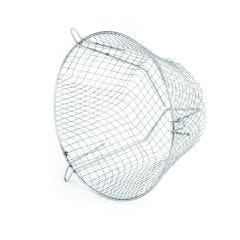
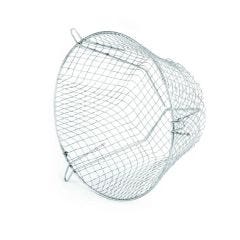
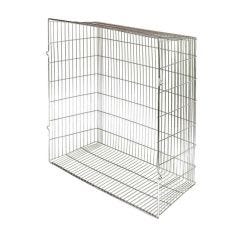

At BES, we supply a focused range of flue terminal guards designed to help protect people, property and the flue terminal itself, while supporting compliant installation across domestic and light commercial settings. Our range includes circular, rectangular and overflow terminal guards in a choice of materials and sizes, suitable for gas and oil boiler applications when selected and installed correctly.
Get a better deal on boiler flue guards when you shop online at BES, with speedy delivery on all orders, hassle-free 30-day returns, backed by knowledgeable customer support.
Read More
In the middle of installing a new boiler, upgrading an existing system, or making changes to a property's exterior? It’s often at this stage that installers and homeowners alike start asking whether a flue terminal guard is required, especially if a flue is being repositioned or ends up at a low level.
In practical terms, a flue terminal guard should be fitted whenever there’s a risk of the terminal being touched, obstructed or damaged. This typically applies when:
Hot flue gases need to exit a building safely in an accessible location
There’s a risk of debris, leaves or other obstructions gathering around the terminal
Products of combustion could be directed towards people, walkways or neighbouring properties
UK guidance, including BS 5440-1, states that a flue terminal guard is required where a terminal is positioned less than 2 metres above ground level or in any location where accidental contact is possible.
While modern boilers primarily emit water vapour and carbon dioxide, flue gases are still discharged at high temperatures. If a boiler were to develop a fault, there is also the potential risk of carbon monoxide being present. For this reason, fitting a suitable terminal guard plays an important role in protecting the flue terminal itself, people and properties.
Final assessment of whether a guard is required should always be made by the installer, and gas appliances must be installed and checked by a Gas Safe registered engineer in line with current regulations and manufacturer instructions.
Our selection of flue terminal guards is grouped into three clear product types, making it easier to choose the correct option for your installation.
Circular terminal guards are the most common choice for domestic boiler flues. They are designed to fit around round flue terminals and are available in a range of sizes and materials. Some variants feature cut-outs or high-level openings to suit specific terminal positions while maintaining airflow clearance.
Rectangular terminal guards are typically used where flue terminals are larger, non-standard or positioned in commercial or older installations. Their wider footprint provides effective protection without restricting discharge when correctly sized.
Overflow terminal guards are designed for condensate or overflow discharge points, rather than combustion flues. These smaller guards help prevent accidental contact or damage to exposed discharge outlets and should not be used in place of a combustion flue guard.
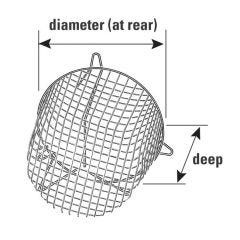
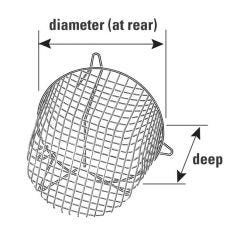
Flue terminal guards have to be correctly sized to ensure they do not obstruct flue operation or restrict the safe discharge of products of combustion. Terminal flue guard installation will vary based on the location and type of flue you're working with. For example, a typical flue you see from the side or back of a house will need to be 2m off the ground and at least 300mm away from any opening (that's before factoring in other pipework). Flues on roofs need to be a minimum of 600mm above the roof and sometimes covered at the base.
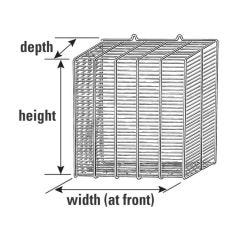
When measuring for a flue terminal guard:
Measure the width and height of the flue terminal
Allow sufficient clearance on all sides of the terminal
Ensure the guard depth is adequate so the terminal does not sit flush against the mesh
Always follow the boiler manufacturer’s guidance and relevant standards when selecting a guard size. A guard that is too small or incorrectly positioned may affect the boiler’s performance too.
Flue terminal guards should be:
Securely fixed to a suitable surface
Installed so they do not impede airflow or inspection access
Fitted in line with manufacturer instructions and current regulations
No modification to a gas flue system should be carried out without appropriate qualifications. If there is any uncertainty, professional assessment is strongly recommended.
Whether you need to create a waterproof with quality flue flashing or upgrade an IL gas vent system, BES has all your flue system needs covered. You can shop our range here, with great prices on flexible liners and cowls.
BES has a fast and efficient delivery service, helping our customers across the country get supplies shipped for installation in no time. If you have any questions about flue guards, please get in touch via the contact information at the top or bottom of this page.
When is a flue terminal guard required by law?
A guard is required where a flue terminal is less than 2 metres above ground level or could be easily touched or damaged, in line with guidance such as BS 5440-1.
Do I need a flue guard for a condensing boiler?
Yes, if the flue terminal is in an accessible location. Condensing boilers still discharge hot gases and must be protected where required.
What’s the difference between stainless steel and plastic-coated flue guards?
Stainless steel offers superior corrosion resistance, while plastic-coated guards provide added surface protection over a steel frame.
Are flue guards required for oil boilers?
Where oil boiler flue terminals are accessible, a guard is recommended. Stainless steel guards are often preferred due to the operating environment.
How do I measure my flue to choose the right guard size?
Measure the terminal dimensions and ensure the guard provides adequate clearance around the terminal without restricting airflow.
Can any flue guard be used on any boiler?
No. The guard must be suitable for the terminal type, size and application, and installed in accordance with manufacturer and regulatory guidance.